What we do
The Department of Biochemistry is dedicated to understanding biological processes at the molecular level. We research how these processes drive cellular and organismal organisation and behaviour.
The department fosters both basic science and its application to medicine. Our researchers apply their expertise to biological systems ranging from microbes, through animal cells, tissues, and whole organisms.
We work across disciplinary boundaries in an environment that actively facilitates collaborative science. Our department provide shared access to state-of-the art infrastructure and cutting-edge technologies to facilitate our world-class research. The department also develops new technologies necessary to achieve our research goals.
Latest discoveries
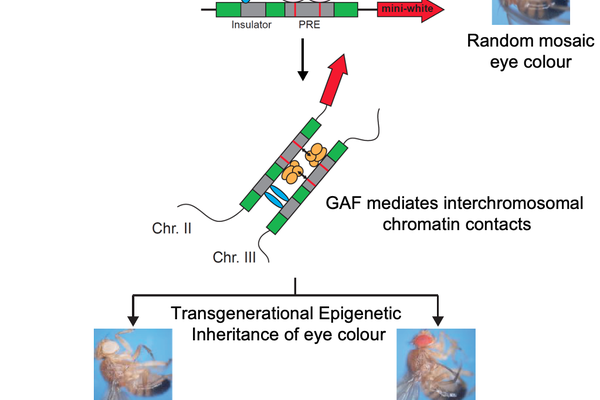
Epigenetic Inheritance - but short of short RNAs!
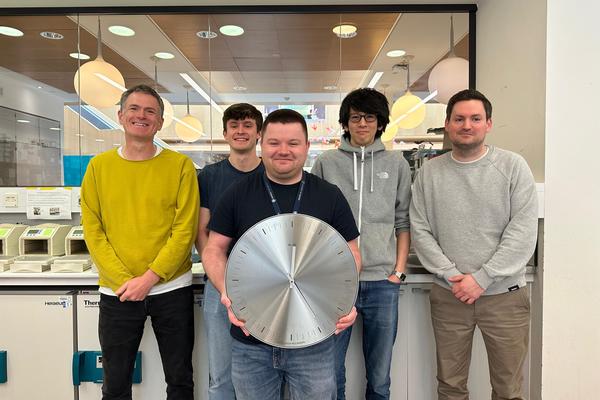
Cancer beats the clock
Pancreatic cancer immune map provides clues for precision treatment targeting
Identifying fake Covid-19 vaccines by analysing vial labels and vaccine liquids
DNA origami: a new frontier in epigenetic inheritance across generations
Novel method to detect fake vaccines using mass spectrometry
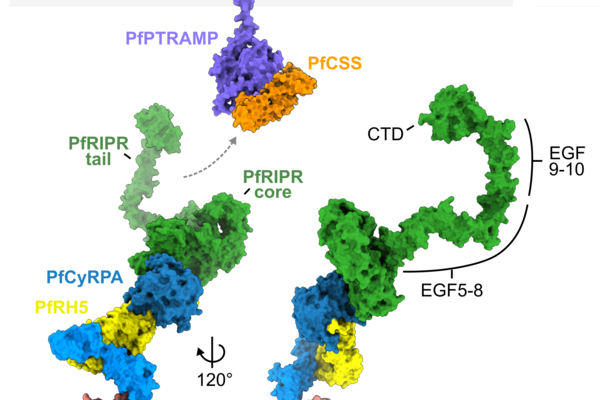
How do naturally occurring antibodies recognise the malaria vaccine candidate PfRH5?
Novel techniques to screen for contaminants in medicinal syrups which have recently led to the death of hundreds of children
Immune cells hunt down cancer around the body – discovery could lead to personalised treatments for advanced breast cancer
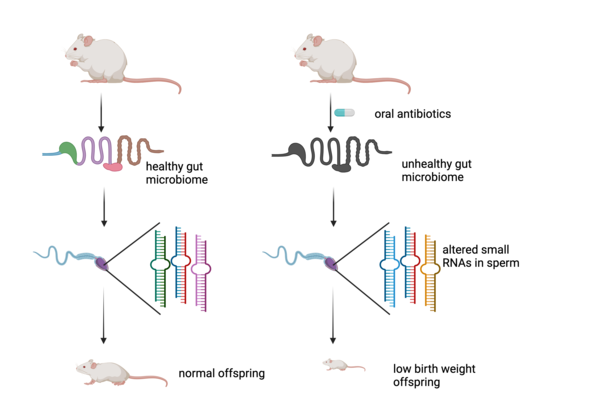
Research in mice identifies surprising consequences of a disturbed gut microbiome
Visualising how a malaria parasite invades human red blood cells
COVID Moonshot initiative identifies novel antiviral compound
We widen the scope of biochemistry
Sharing biochemistry
Elspeth Garman talks about the life of Sir John Kendrew
International Women’s Day: Biochemistry celebrates “Women in Science” at the History of Science Museum
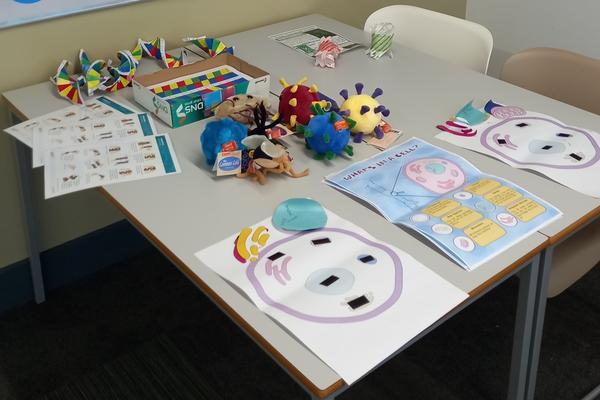
Oxford Brookes Science Bazaar 2023