

Announcing the 2026 Suffrage Science Awardees in Maths and Computing

The Suffrage Science Awards honour pioneering women in science, with the January 2026 awards focusing on Maths and Computing.
The Suffrage Science Awards in Maths and Computing took place on the evening of Monday 26 January 2026. The 10 recipients received their awards at a ceremony hosted in the Dorothy Crowfoot Hodgkin Building at the heart of the University Science Area. Whitley Professor of Biochemistry Dame Amanda Fisher founded the Suffrage Science Scheme in 2011 with Vivienne Parry OBE to honour pioneering women in science and create a self-perpetuating cohort of talent that encourages others to enter science and reach senior leadership roles. Both founders hosted the event along with Marta Kwiatkowska, Professor of Computing Science at the University of Oxford.
The scheme originally recognised pioneering leaders in life sciences, and now recognises women in the fields of Engineering and Physical Sciences, and in Mathematics and Computing. In 2014 one of the awardees was Oxford University’s Vice Chancellor, Professor Irene Tracey.
Each awardee receives a piece of Suffrage Science heirloom jewellery, and then nominates who they wish to pass on their award to every two years. This recognition from peers who want to give recognition for their work is extremely meaningful to award recipients. Each heirloom creates its own 'family tree' as the award gets handed from one awardee to the next, creating an international network of inspiring female role models across all the Suffrage Science branches.
Since the Suffrage Science awards started, there have now been 172 holders of the heirlooms creating a network of inspirational women from across the globe.
We are delighted to celebrate the 2026 Maths and Computing awardees here:

Professor Sara Bernardini, University of Oxford
Nominator Professor Nobuko Yoshida says: At the heart of Sara’s research is the desire to combine theoretical and technical advancements in AI with the demands of the real world. She has worked closely with industry and stakeholders, ensuring her solutions are crucial to tackling end users’ practical problems. She has worked in several domains, such as space mission operations, nuclear decommissioning, mining, underwater missions, and offshore energy, leading several projects funded by Innovate UK, EPSRC, NERC, the Turing Institute, and the Leverhulme Trust. She is also active as an EDI champion.”

Professor Susanne Bødker – University of York
Nominator Professor Wendy Mackay says: Professor Bødker has played a significant role in shaping the European HCI community: Her highly influential book Through the Interface introduced Activity Theory as a deep theoretical foundation for the field of Human-Computer Interaction, and her work on artifact ecologies has had an impact both on theory and real-world practice. I am proud to have collaborated with her over the years. Professor Bødker has received numerous awards and distinctions, including the ACM/SIGCHI Lifetime Research award in 2024, and I am delighted to nominate her for this prestigious award.”
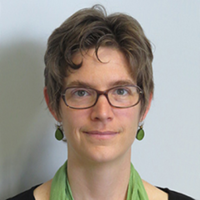
Professor Vanessa Didelez - University of Bremen and Leibniz Institute for Prevention Research and Epidemiology (BIPS)
Nominator Dr Rhian Daniel says: Professor Vanessa Didelez is a brilliant statistician and an exemplary role model, who not only has a deep understanding of the mathematical and logical underpinnings of statistical causal methods, but also directs these skills - without compromise - only towards answering the most useful real-life questions. She is a kind and inspirational colleague to many, and is a patient and wise mentor and supervisor to countless PhD students and Post Docs. As well as her outstanding work in research, teaching and supervision, she has consistently contributed positively and thoughtfully to the international community of statisticians working in causal inference, for example by leading the European Causal Inference Meeting for many years. In this role, and in everything she does, Vanessa has strongly championed women in this field, as well as being a force for action on other important causes such as environmental sustainability.

Professor Claudia Garetto – Queen Mary University of London
Nominator Professor Sara Lombardo says: “Professor Claudia Garetto is a leading scholar in Partial Differential Equations and Mathematical Analysis. Claudia has shaped the field with clarity, depth, and originality, inspiring colleagues and students to think boldly and rigorously. Her initiatives have opened doors, challenged assumptions, and reminded us that excellence is most powerful when it includes everyone. She acts with grace, humour, and an unshakeable belief in the value of every voice. This award celebrates not only her scholarly achievements but her tireless efforts to make the mathematical sciences community more equitable, vibrant, and welcoming.”
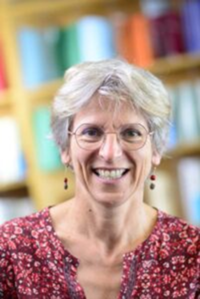
Professor Anne Gégout-Petit - Université de Lorraine
Nominator Dr Juhyun Park says: “Professor Anne Gégout-Petit is a truly inspirational scientist. Her influence on me as well as many others is not only the leadership of research in scientific domains and outreach activities that she is committed to. She paves the way for others with her innate openness, sensitivity and embracing attitude. She has been an amazing and admirable role model, colleague and friend.”
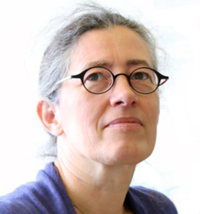
Professor Els Goetghebeur – Ghent University
Nominator Professor Bianca de Stavola says: “I wish to nominate Professor Els Goetghebeur for her energetic support of women in science and her belief in the pursuit of principled answers to research and medical decision-making questions. She chairs the expert Center for Data Analysis and Statistical Science (DASS) and leads the consulting unit StatGent, both based at Ghent University. Until recently, she also served as Chief Editor of Statistics in Medicine, one of the leading journals in the field. Through her research, leadership, and mentorship, Els Goetghebeur has had a profound influence not only on biostatistics and applied health research but also on fostering an environment in which female scientists can thrive.”

Dr Azalea Raad – Imperial College London
Nominator Professor Alexandra Silva says: “Dr Azalea Raad is a fantastic researcher and mentor. Her research vision and determination in carrying a research program to success have been visible to the community at large. Dr. Raad’s work has had a significant impact both in academia and industry. Academically, this is witnessed by the many publications in top venues, invited presentations, and grants, including the prestigious EPSRC Future Leaders fellowship. In industry, Dr. Raad has actively been working with engineers at Meta to deploy the formal verification techniques that she developed. This is a testament to the breadth of Dr. Raad’s research, as well as her commitment to make her theoretical deep results available to the wider community.”
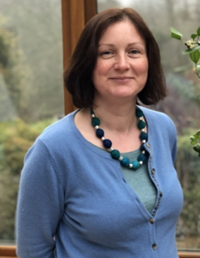
Professor Judy Robertson – University of Edinburgh
Nominator Dr Sue Sentance says: “Professor Judy Robertson is a computer scientist who takes an interdisciplinary approach to supporting young people's understanding of AI and computing. She has been researching and developing technology with and for children for over twenty years. Most recently, she has been leading the impactful Data Education in Schools initiative since 2019, designing frameworks to integrate data science into the Scottish curriculum. She is known as a leader in AI literacy, with a focus on supporting teachers’ AI literacy and listening to pupils' perceptions of AII.”
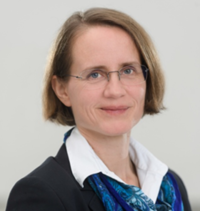
Professor Anja Schlömerkemper – Würzburg University
Nominator Professor Apala Majumdar says: “Professor Anja Schlömerkemper is a profound mathematician and outstanding scholar with broad expertise in the calculus of variations, applied analysis and the mathematics of materials science. Anja is hugely committed to equality and diversity in mathematics and has supported multiple researchers from under-represented groups. She is an inspirational role model for young female mathematicians around the world.”

Professor Abigail Sellen – Microsoft Research
Nominator Professor Yvonne Rogers says: “Professor Abigail Sellen is Vice President, Distinguished Scientist and Lab Director at Microsoft Research Cambridge in the UK, with a research team in Nairobi, Kenya. At Microsoft, she oversees a portfolio of industrial research which takes an interdisciplinary approach to designing and developing new AI-infused technologies. Abigail is an expert in human-centric computing, publishing books and papers on many topics including: human-centric AI, healthcare, computer input, help systems, reading, paper use in offices, videoconferencing design, search, photo use, gesture-based input, human error and computer support for human memory. She is also an inventor with over 60 patents pending or granted. Abigail is a Fellow of the Royal Society, the Royal Academy of Engineering, the Royal Society for the Arts, and the ACM. She is also an International Member of the US National Academy of Engineering and the ACM SigCHI Academy.”
https://www.youtube.com/embed/zW8RALuAzOU
Find out more at www.suffragescience.com or follow us on Instagram @suffragescienceawards


